Skip to content

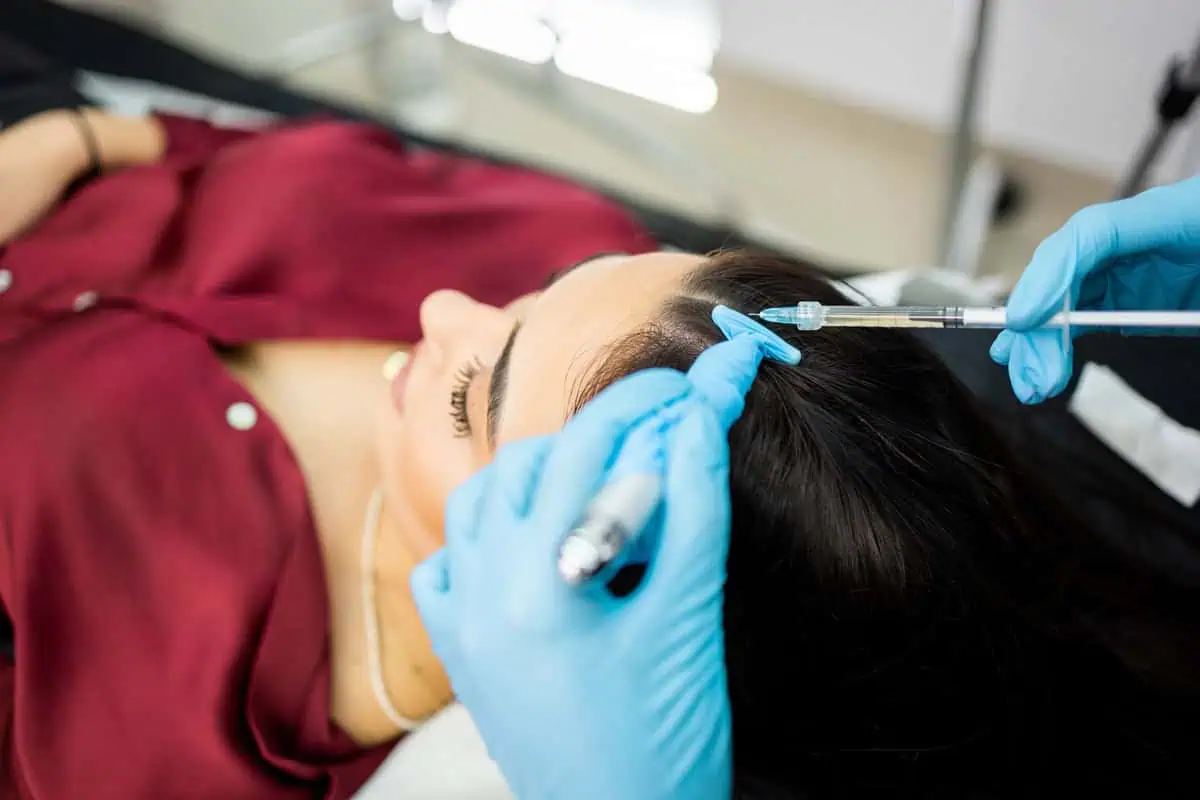
Table of Contents
If you’re finding more hair in the shower drain, on your pillow, or in your brush, and your part looks a little wider than it used to, the change can feel unsettling. Thinning that builds slowly over months or years often has less to do with how you care for your hair and more to do with follicles gradually weakening.
At Peninsula Plastic Surgery, PRP Hair Restoration is one of the options we offer for this type of thinning to patients across Salisbury, MD, Millsboro, DE, and Berlin, MD. This article covers why hair sheds and thins, how PRP may help weakened follicles, and what a realistic outcome looks like.
Can PRP hair restoration make my hair look fuller again?
PRP hair restoration may help hair look fuller by combining microneedling with platelet-rich plasma from your own blood, which research suggests can support weakened follicles. Most patients have two to three sessions about a month apart, with results typically seen around three months after the last one, and those with more recent hair loss tend to respond best, though results vary.
Why Hair Sheds and Thins
Losing some hair every day is a normal part of the growth cycle. A few things tend to push shedding and thinning beyond that baseline:
- Stress, illness, or childbirth, which can trigger a temporary wave of excess shedding
- Genetics and hormones, which drive pattern thinning as follicles gradually shrink and grow finer hairs
- Age, since follicles tend to spend less time in their growth phase over the years
Between busy work weeks and long summers near the beach on the Eastern Shore, many people don’t notice thinning until it’s been building for a while. If your hair loss is sudden, patchy, or rapid, it’s best to have a medical evaluation first, since those patterns can have other causes.
How PRP Hair Restoration Can Help
PRP stands for platelet-rich plasma, a concentration of platelets made by spinning a small sample of your own blood. Platelets release growth factors, which are proteins that signal cells to repair and grow.
At Peninsula Plastic Surgery, treatment combines microneedling with injections of PRP into the scalp. Microneedling creates tiny channels in the skin, and the concentrated PRP is then placed directly into thinning areas. Research suggests these growth factors may support blood supply and activity around weakened follicles, helping them stay in the growth phase longer. That’s why many patients consider this scalp treatment for thinning hair when over-the-counter products haven’t made a noticeable difference.
One thing to be clear about: PRP aims to support the follicles you still have. It doesn’t create new follicles where hair has stopped growing.
What Kind of Hair Loss PRP May Help
PRP tends to work best when follicles are still active, so the type and length of your hair loss shapes what’s realistic.
Early to Moderate Pattern Thinning
This is where PRP typically fits best. People whose hair loss began within the last three to five years often see better results, since their follicles are weakening but still active. For many in this group, PRP works as a hair density treatment for thinning hair that helps stabilize existing hair and improve thickness over a series of sessions.
Shedding After Stress, Illness, or Pregnancy
This type of shedding often improves on its own as the body recovers. For patients dealing with heavier loss, PRP treatment for excessive hair shedding may be worth discussing with a provider alongside time and recovery, since reducing shedding is often the first change patients notice.
Advanced, Sudden, or Patchy Hair Loss
When hair loss has continued for more than five years, improvement from PRP tends to be minimal. Sudden or patchy loss may also have a medical cause that needs evaluation before any cosmetic treatment. A provider can help you understand which options fit your situation.
What to Expect During a PRP Hair Restoration Session
Each session follows a few simple steps:
- A quick blood draw
- Processing the sample to concentrate the platelets while your scalp is prepared
- Microneedling across the thinning areas
- Injections of PRP into the treated scalp
Downtime is typically minimal. Some scalp sensitivity, minor swelling, or redness is common afterward and usually settles quickly. Your provider may recommend avoiding certain medications before treatment and will give you simple aftercare instructions.
What Results Look Like Over Time
Most patients complete two to three treatments scheduled about one month apart, with results typically seen around three months after the final session. A few factors shape how much improvement you see:
- How long you’ve been losing hair, since more recent loss tends to respond better
- The cause and pattern of your thinning
- Your individual response to treatment
Results can last several months to more than a year, and maintenance treatments help sustain them. Some patients also pair PRP with Nutrafol, a daily hair supplement we offer, as part of a broader hair health plan.
Is PRP Hair Restoration Right for You?
PRP tends to suit adults with hair loss that began within the last three to five years and follicles that are still active. It’s important to know that using PRP for hair loss is considered off-label. The research is promising, but it isn’t a standardized or guaranteed treatment, and results vary from person to person.
PRP may not be appropriate for people who:
- Have certain blood or platelet disorders
- Take blood thinners
- Have an active scalp infection or certain medical conditions
Side effects are usually mild and temporary, including scalp soreness, swelling, redness, or slight bruising.
FAQs
How soon will I notice less shedding?
Many patients notice reduced shedding first, with fuller-looking results typically seen around three months after the final treatment.
How many PRP sessions will I need?
Most patients need two to three sessions spaced about one month apart, followed by maintenance treatments as recommended.
Does PRP hair restoration hurt?
Most patients tolerate it well, describing mild pressure or tenderness during microneedling and injections, with some scalp sensitivity afterward.
How long do PRP results last?
Results can last several months to over a year, and maintenance sessions help sustain them over time.
Thicker-Looking Hair Starts With a Consultation
PRP Hair Restoration uses growth factors from your own blood to support weakened follicles, with results that build gradually and vary from person to person. For patients hoping to restore hair density in Salisbury, MD, as well as those in Millsboro, DE, and Berlin, MD, the team at Peninsula Plastic Surgery can walk you through our hair loss treatments in Salisbury to see what fits your hair and goals. Contact us with any questions. Schedule your hair loss treatment today.